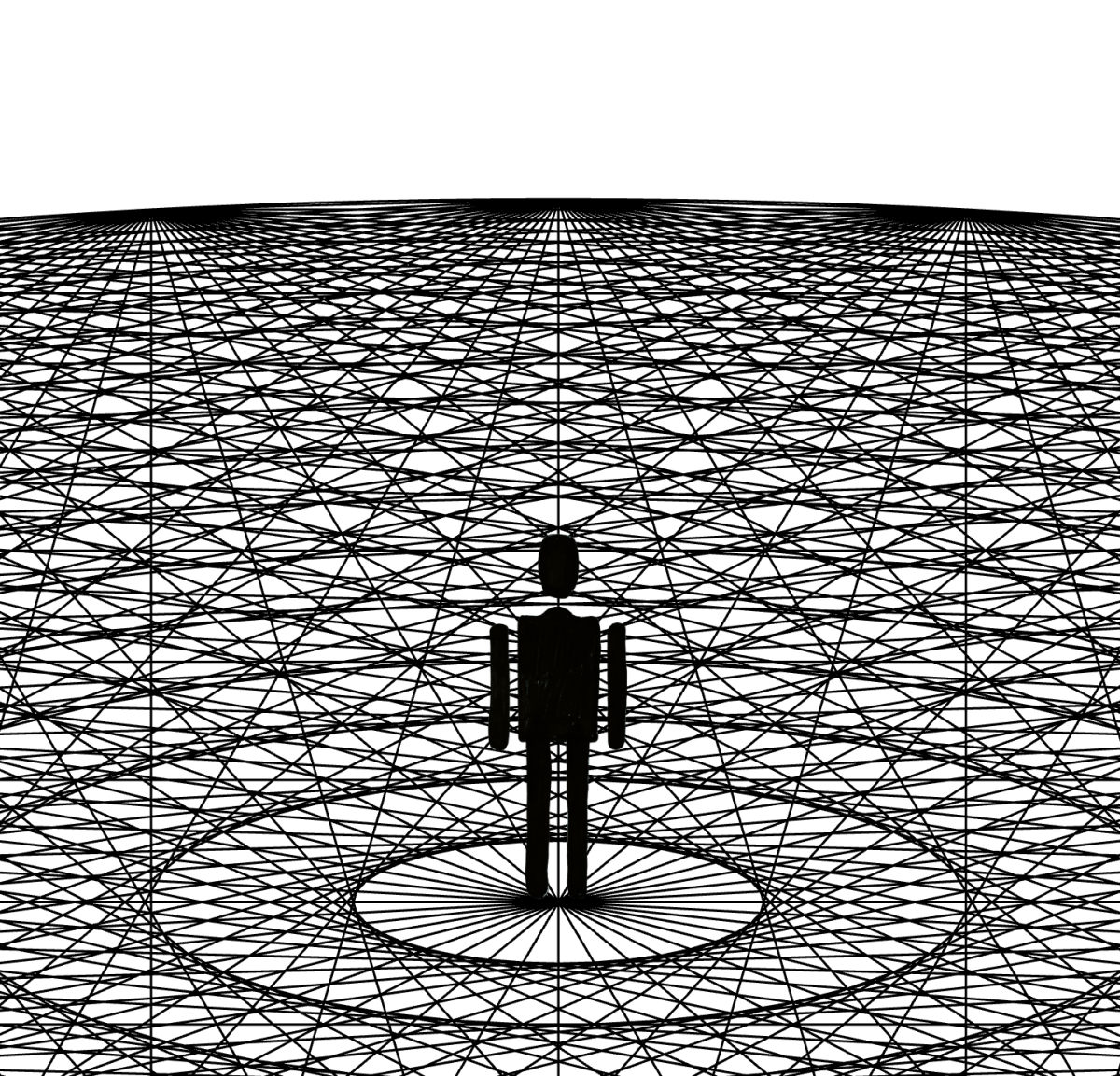
MERKABA CODEX LUX
Orientation, structure, and conscious order — as a clearly documented framework for insight, responsibility, and traceable thinking.
The Merkaba Codex LUX is an interdisciplinary research project exploring how order, knowledge and reality can be understood in a structured way.
At its core lies the investigation of fundamental structures that appear in different areas of reality — in geometry, nature, consciousness, knowledge and human experience.
The Codex is not intended as a closed system, but as an open framework for orientation and research. Its aim is to make relationships visible that are often considered separately and to develop a clear language for complex structures of reality.
The three areas of this website provide an entry point into the project:
Orientation
introduces the fundamental ideas and concepts.
The Association
presents the organizational foundation of the project.
The Codex LUX
shows the structural architecture and the current stage of development of the research.



What is the Merkaba Codex LUX?
The Merkaba Codex LUX is a structured framework for orientation and research concerned with the investigation of fundamental principles of order in reality, perception, and systems.
It is not a belief system, not a dogma, and not a closed system, but an open framework for people who seek to connect order, insight, and responsibility in a conscious way.
At its center lies the exploration and documentation of foundational structures of order — geometric, systemic, epistemological, and ethical — together with their clear and traceable presentation in a structured form.
Note: The content is intended for orientation, education, and research. It does not replace medical, therapeutic, or legal advice and does not contain any promises of healing or effectiveness.
Basic Structure of the Merkaba Codex LUX
The Merkaba Codex LUX describes a structural model of order. This model organizes complex relationships within a clear architecture that develops from basic reference points to dynamic systemic structures.
The fundamental structure unfolds in a defined sequence:
Zero Point – reference point of any order
→ Primordial Cell – smallest structural unit
→ Merkaba – stable field of order
→ 7 – complete differentiation of a system
→ 49 – expanded field of structured relations
→ Gate 50 – point of integration and recalibration
→ 144 – relational space of maximum differentiation
→ 72 – membrane structure between inner and outer
→ Torus – feedback and closed circulation
This sequence describes a development from reference to differentiation, relationship, boundary, and feedback. The Codex LUX therefore provides a framework for analyzing and documenting complex systems.
Why the Codex LUX?
Because modern complexity often leads to fragmentation: too much information, too little structure. The Codex LUX begins precisely at that point — not as an instrument of control, but as a framework for orientation.
What you will find here
• Models of order that make thought easier to structure
• Terms, levels, and relationships — explained step by step
• Documentation rather than assertion — understandable and verifiable
• Ethics and responsibility as the basis of every application
• Terms, levels, and relationships — explained step by step
• Documentation rather than assertion — understandable and verifiable
• Ethics and responsibility as the basis of every application
The Merkaba Codex LUX Association
The Association is the independent, non-commercial body behind the Codex LUX. It enables the long-term work of research, documentation, and communication — organizationally, transparently, and responsibly.
Open participation is possible for people who wish to contribute seriously and constructively — in research, editing, technology, design, or organization.
Invitation
The Merkaba Codex LUX is open to people interested in order, structure, insight, and responsible thinking. If you would like to learn, contribute, or support the work, you will find a clear point of entry here.
Not for control — but for conscious orientation in thought, action, and understanding.